


Published: September 25, 2026
Garbage Bag Color Coding Guide 2026: Which Color Bag Is Used for Which Waste?
Waste segregation is one of the simplest ways to make waste collection, recycling, and disposal more efficient. Using the right garbage bag colour for different types of waste helps households, offices, hospitals, restaurants, factories, and commercial establishments separate waste before it reaches the collection or treatment stage.
However, garbage bag colour coding is not always universal. The colour used for a particular waste stream can depend on the type of waste, local municipal guidelines, and the sector in which the waste is generated.
This guide explains which colour garbage bag is generally used for different types of waste, how colour-coded waste segregation works, and how to choose the right garbage bags for homes, offices, healthcare facilities, and commercial applications. Additionally, if you are looking for top-quality garbage bags, you can simply purchase them in bulk at wholesale prices through the Packaging Moglix platform.
What Is Garbage Bag Color Coding?
Garbage bag colour coding is a waste segregation system in which different coloured bags or containers are assigned to specific categories of waste. Instead of putting all waste into a single garbage bag, waste is separated according to its type and the appropriate disposal or recycling process.
For example, recyclable materials can be kept separate from wet waste, while hazardous or biomedical waste needs specialised handling. Correct segregation reduces contamination, makes recycling easier, and helps waste handlers identify potentially hazardous materials.
For businesses and institutions generating large quantities of waste, colour-coded garbage bags can also make daily collection and internal waste-management processes more organised.
Why Is Garbage Bag Color Coding Important?
Proper colour coding makes waste segregation easier at the point where waste is generated. This is important because mixed waste is more difficult to recycle, process, or dispose of safely.
Some key benefits include:
- Better waste segregation: Different waste types can be separated before collection.
- Improved recycling: Dry and recyclable materials are less likely to be contaminated by wet waste.
- Safer waste handling: Hazardous and biomedical waste can be identified more easily.
- Cleaner workplaces: Separate bags help maintain organised waste collection points.
- Efficient disposal: Waste can be directed towards the appropriate treatment or disposal process.
- Reduced contamination: Keeping different waste streams separate improves downstream processing.
Understand the Garbage Bag Colour Coding Chart
For everyday waste segregation, colour conventions can vary by municipality or organisation. Therefore, users should follow the colour system specified by their local authority.
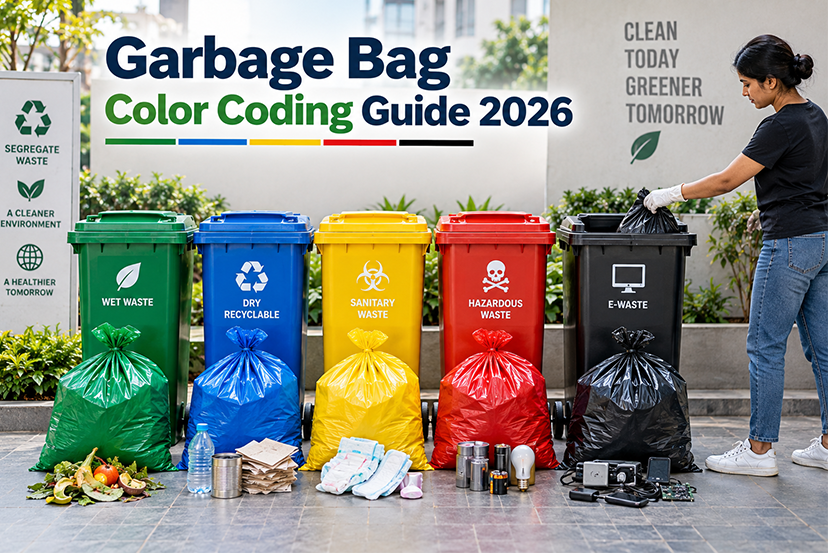
A commonly used segregation approach is:
Green Garbage Bags - Wet or Organic Waste
Green bags are commonly associated with wet or biodegradable waste in waste-segregation systems.
This may include:
- Fruit and vegetable peels
- Food leftovers
- Cooked food waste
- Garden waste
- Leaves and grass
- Other biodegradable organic waste
Wet waste should generally be kept separate from dry recyclables to prevent contamination.
Blue Garbage Bags - Dry or Recyclable Waste
Blue is commonly used for dry or recyclable waste in many waste-segregation systems.
Typical materials may include:
- Paper
- Cardboard
- Clean plastic packaging
- Metal cans
- Glass containers
- Other recyclable dry materials
Before placing recyclable materials in a garbage bag, check the collection requirements of your local waste-management service.
Black Garbage Bags - General or Non-Recyclable Waste
Black garbage bags are often used for general, residual or non-recyclable waste, depending on the local segregation system.
Examples can include:
- Contaminated packaging
- Non-recyclable household waste
- Sweeping waste
- Certain composite materials
- Other residual waste
Black bags should not automatically be treated as suitable for hazardous or biomedical waste. Such waste requires separate handling according to applicable regulations.
Yellow Garbage Bags - Specialised Waste Streams
Yellow bags have an important role in biomedical waste management. Under India's Bio-Medical Waste Management Rules, 2016, the yellow category includes waste such as human and animal anatomical waste, soiled waste, certain discarded or expired medicines, chemical waste, and contaminated laboratory waste.
Therefore, yellow garbage bags should not simply be considered a universal bag for all household waste.
Biomedical Waste Bag Colour Coding in India
Healthcare facilities require a more specific segregation system. According to CPCB guidance based on the Bio-Medical Waste Management Rules, 2016, biomedical waste is divided into four colour-coded categories: Yellow, Red, White and Blue.
Yellow Bag for Biomedical Waste
The yellow category is used for several types of biomedical waste, including:
- Human anatomical waste
- Animal anatomical waste
- Soiled waste
- Certain discarded or expired medicines
- Chemical waste
- Contaminated linen and bedding
- Certain microbiology and biotechnology laboratory waste
The exact handling and treatment requirements depend on the waste category and applicable rules.
Red Bag for Contaminated Recyclable Waste
Red bags or containers are used for contaminated recyclable biomedical waste.
Examples can include certain contaminated plastic items such as:
- Gloves
- IV tubes
- Catheters
- Syringes without needles
- Other contaminated recyclable plastic waste
CPCB guidance specifies red colour-coded bags or containers for relevant biomedical waste and requires appropriate labelling and biohazard identification.
White Puncture-Proof Container for Sharps
White or translucent puncture-proof containers are used for biomedical sharps.
These can include:
- Needles
- Blades
- Other sharp metal objects
- Sharps capable of causing injury
Because sharps can cause injuries and potential exposure to infection, they should never be placed loosely inside ordinary garbage bags. CPCB's colour-coded biomedical waste framework specifically identifies white containers for waste sharps, including metals.
Blue Container or Bag for Glassware
Blue is used in the biomedical waste system for certain glassware and metallic body implants.
Examples include:
- Glass vials
- Broken or discarded glassware
- Certain medicine bottles
- Metallic body implants
The applicable biomedical waste requirements should be followed by the healthcare facility for collection, storage, transportation, and treatment.
How to Choose the Right Garbage Bag for Waste Segregation?
Colour is only one factor when selecting garbage bags. The bag should also match the type, weight and moisture level of the waste.
1. Consider the Waste Type: Choose bags according to whether the waste is wet, dry, recyclable, residual, biomedical or hazardous. Different waste streams may require different bag materials and handling procedures.
2. Check Bag Thickness: Heavy or sharp waste requires stronger bags or, where required, rigid puncture-proof containers. Thin garbage bags may be suitable for lightweight general waste but should not be used where regulations require specialised containers.
3. Choose the Right Bag Size: Common garbage bag sizes range from small bags for household bins to large bags for offices, commercial establishments, institutions and industrial facilities.
Select a size that fits the bin properly without overfilling.
4. Look for Leak Resistance: Wet waste can generate moisture and liquids. Leak-resistant garbage bags help minimise leakage during collection and transportation.
5. Use Proper Labelling: For specialised waste, especially biomedical waste, colour coding should be supported by appropriate labels, symbols, and handling procedures. CPCB guidance specifies labelling and biohazard identification for applicable biomedical waste bags and containers.
6. Follow Local Waste-Management Rules: Before purchasing garbage bags in bulk, check the requirements of your municipality, pollution-control authority, healthcare facility or waste-management contractor.
Garbage Bag Colour Coding for Different Places
Garbage Bags for Homes
Homes generally generate a combination of wet, dry, and residual waste. Separate bins and bags can be used for biodegradable food waste, recyclable dry waste, and residual waste according to the local municipal system.
Garbage Bags for Offices
Offices commonly generate paper, packaging, food waste, and general waste. Separate collection points can make segregation easier for employees and housekeeping teams.
Garbage Bags for Restaurants
Restaurants generate significant quantities of food and wet waste along with packaging and recyclable materials. Separate waste streams can help prevent food waste from contaminating recyclable packaging.
Garbage Bags for Hospitals
Hospitals require specialised biomedical waste segregation. Facilities must follow the applicable biomedical waste rules and CPCB guidance rather than relying on general household garbage bag colour conventions.
Garbage Bags for Factories and Industrial Facilities
Industrial facilities may generate general waste as well as process-specific, hazardous, or recyclable waste. Bag and container selection should therefore be based on the material being discarded and the applicable regulatory requirements.
How to Buy Garbage Bags for Different Waste Categories?
Choosing the right garbage bag depends on the waste type, bag size, thickness, capacity, material, and intended application. For homes, offices, restaurants, hospitals, and industrial facilities, buyers should consider the quantity and nature of waste generated before purchasing.
For bulk requirements, businesses can compare garbage bags by size, material, thickness, colour, and pack quantity to select suitable options for their waste-segregation process. Buyers should also verify whether specialised waste bags or containers meet the relevant regulatory and institutional requirements.
Conclusion
Garbage bag colour coding makes waste segregation easier by providing a simple visual system for identifying different waste streams. Green and blue are commonly associated with wet and dry waste in many municipal systems. Businesses and industries looking to buy garbage bag an simply procure them at Packaging Moglix in bulk. We ensure procurement of top-quality garbage bags at wholesale prices.
The most important rule is to classify the waste first, then use the bag or container prescribed for that category. Following local municipal requirements and applicable industry regulations ensures safer collection, better recycling, and more efficient waste management.
Get In Touch