


Published: July 27, 2026
7 Types of Plastic Crates: Understand the Uses, Design, and Benefits
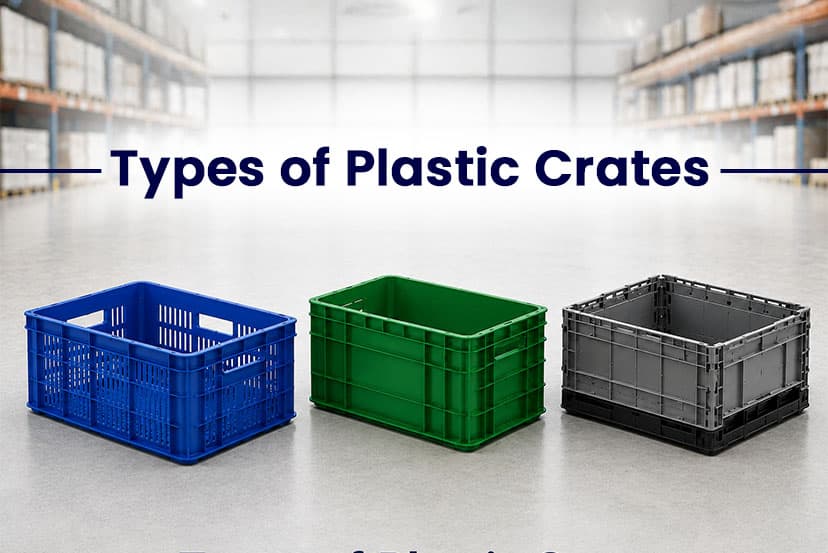
Plastic crates have become an essential part of modern storage, transportation, warehousing, and logistics operations. Whether you're managing a manufacturing facility, retail store, warehouse, agricultural business, or food processing unit, choosing the right type of plastic crate can significantly improve operational efficiency.
Unlike traditional wooden or cardboard boxes, plastic crates are durable, lightweight, reusable, moisture-resistant, and capable of handling heavy loads. They are designed to protect products during storage and transportation while reducing packaging costs over the long term.
In this comprehensive guide, we'll explore the 7 major types of plastic crates, their design, applications, benefits, and how to choose the best one for your business.
What Are Plastic Crates?
Plastic crates are storage and transportation containers manufactured using high-quality polymers such as:
- High-Density Polyethylene (HDPE)
- Polypropylene (PP)
- Polyethylene (PE)
These materials provide excellent strength, chemical resistance, and impact resistance, making plastic crates suitable for industrial as well as commercial use.
Plastic crates are widely used in:
- Warehouses
- Retail stores
- Food industries
- Dairy plants
- Agriculture
- Pharmaceutical companies
- Manufacturing units
- Cold storage facilities
- E-commerce logistics
Why Plastic Crates Are Popular?
Businesses prefer plastic crates because they offer several advantages over traditional packaging.
Some major reasons include:
- Long service life
- High load-bearing capacity
- Reusable for years
- Waterproof construction
- Easy to clean
- Stackable designs
- Resistant to corrosion and chemicals
- Lightweight yet durable
Quick Look At The 7 Types Of Plastic Crates
1. Solid Wall Plastic Crates
Design
Solid wall plastic crates feature completely enclosed sides and a solid base, providing maximum protection to stored products.
These crates prevent dust, moisture, and contaminants from entering, making them ideal for sensitive products.
Common Uses
- Pharmaceuticals
- Electronics
- Medical supplies
- Food ingredients
- Textile products
- Precision engineering components
Benefits
- Excellent product protection
- Dustproof storage
- Easy cleaning
- Strong construction
- Suitable for export packaging
2. Ventilated Plastic Crates
Design
Ventilated crates include perforated sides and bases that allow free airflow around the contents.
This airflow helps maintain freshness and prevents moisture accumulation.
Common Uses
- Fruits
- Vegetables
- Dairy products
- Bakery products
- Seafood
- Poultry
Benefits
- Better ventilation
- Prevents spoilage
- Lightweight
- Easy washing
- Ideal for cold storage
3. Foldable Plastic Crates
Design
Foldable plastic crates feature collapsible walls that can be folded flat when not in use.
This innovative design saves valuable storage and transportation space.
Common Uses
- Retail distribution
- E-commerce
- Grocery delivery
- Logistics companies
- Reverse logistics
Benefits
- Space-saving design
- Reduced transportation costs
- Easy handling
- Lightweight
- Reusable
4. Stackable Plastic Crates
Design
Stackable plastic crates are engineered with reinforced edges and locking corners, allowing them to be safely stacked on top of each other.
This maximizes warehouse storage without damaging products.
Common Uses
- Warehouses
- Manufacturing plants
- Automotive industries
- FMCG companies
- Distribution centers
Benefits
- Better warehouse organization
- Higher storage efficiency
- Reduced floor space
- Easy inventory management
- Improved load stability
5. Attached Lid Plastic Crates (ALC)
Design
These crates come with hinged lids permanently attached to the container.
Once closed, they provide secure protection during transportation.
Common Uses
- Document storage
- Retail logistics
- Electronics
- Pharmaceuticals
- E-commerce fulfillment
Benefits
- Secure transportation
- No separate lid required
- Dust protection
- Tamper-resistant
- Easy stacking
6. Heavy-Duty Industrial Plastic Crates
Design
Heavy-duty plastic crates are manufactured using reinforced HDPE or PP materials to withstand extremely heavy loads.
Many models include ribbed structures for additional strength.
Common Uses
- Automotive components
- Industrial machinery parts
- Engineering goods
- Metal fabrication
- Heavy manufacturing
Benefits
- High load capacity
- Excellent impact resistance
- Long lifespan
- Resistant to chemicals
- Suitable for rough industrial environments
7. Nestable Plastic Crates
Design
Nestable plastic crates fit inside one another when empty, significantly reducing storage space.
Unlike foldable crates, they don't collapse but occupy less volume during return transportation.
Common Uses
- Retail chains
- Food distribution
- Beverage industries
- Agriculture
- Logistics
Benefits
- Saves storage space
- Lower return freight costs
- Easy handling
- Fast loading and unloading
- Efficient warehouse management
Comparison of Different Plastic Crates
Type | Best For | Key Feature |
Solid Wall Crates | Pharmaceuticals, Electronics | Maximum Protection |
Ventilated Crates | Fruits & Vegetables | Air Circulation |
Foldable Crates | Logistics | Space Saving |
Stackable Crates | Warehousing | Vertical Storage |
Attached Lid Crates | Retail Distribution | Secure Storage |
Heavy-Duty Crates | Manufacturing | High Load Capacity |
Nestable Crates | Food & Retail | Reduced Storage Space |
Industries That Use Plastic Crates
Plastic crates are widely used across various industries because of their versatility.
Agriculture
Farmers use plastic crates for transporting:
- Fruits
- Vegetables
- Flowers
- Seeds
Food Processing
Food manufacturers use food-grade plastic crates for:
- Bakery products
- Dairy products
- Frozen foods
- Meat processing
Pharmaceutical Industry
Hospitals and pharmaceutical companies use enclosed plastic crates for:
- Medicines
- Surgical equipment
- Laboratory supplies
Automotive Industry
Manufacturers transport:
- Engine parts
- Bearings
- Fasteners
- Mechanical components
using heavy-duty plastic crates.
Retail & E-commerce
Retailers use plastic crates for:
- Inventory management
- Product delivery
- Warehouse storage
- Reverse logistics
Fisheries
Ventilated plastic crates are ideal for transporting:
- Fish
- Seafood
- Ice-packed products
Benefits of Using Plastic Crates
1. High Durability: Plastic crates can withstand rough industrial handling and repeated use without breaking.
2. Cost-Effective: Although the initial investment may be higher than that of cardboard boxes, plastic crates last for years, reducing replacement costs.
3. Lightweight: Plastic crates are easier to carry compared to metal or wooden containers.
4. Hygienic: Their smooth surfaces make them easy to wash and sanitize, making them suitable for food and pharmaceutical industries.
5. Moisture Resistant: Unlike cardboard packaging, plastic crates do not absorb water.
6. Chemical Resistant: Industrial plastic crates can withstand exposure to oils, chemicals, acids, and cleaning agents.
7. Eco-Friendly: Most plastic crates are reusable and recyclable, helping businesses reduce packaging waste
How to Choose the Right Plastic Crate?
Before purchasing plastic crates, consider the following factors:
Load Capacity: Select a crate that can safely support the weight of your products.
Material: Choose HDPE or polypropylene for industrial-grade applications.
Ventilation: Use ventilated crates for perishable goods and solid crates for sensitive products.
Stackability: For warehouses with limited floor space, stackable crates improve storage efficiency.
Food Grade Certification: If transporting food products, ensure the crates comply with food safety standards.
Size: Select crate dimensions based on product size and available storage space.
Conclusion
Plastic crates have transformed the way businesses handle storage, transportation, and inventory management. From solid wall and ventilated crates to foldable, stackable, attached lid, heavy-duty, and nestable plastic crates, each type is designed to meet specific operational requirements. If you are looking to buy plastic crates in bulk, you can procure them easily at Moglix Packaging. We provide you a wide range of plastic crates and other packging solution at the most reasonable prices delivered pan India.
Selecting the right plastic crate depends on factors such as product type, load capacity, storage conditions, and transportation needs. By investing in high-quality plastic crates, businesses can reduce packaging costs, improve operational efficiency, protect products during transit, and support sustainable logistics practices. Whether you're in agriculture, manufacturing, pharmaceuticals, food processing, or retail, the right plastic crate solution can enhance productivity while ensuring safe and reliable product handling.
Frequently Asked Questions (FAQs)
1. What are plastic crates used for?
Plastic crates are widely used for storing, handling, and transporting goods across industries such as agriculture, retail, manufacturing, pharmaceuticals, and logistics. They help improve product safety, organization, and operational efficiency.
2. Which type of plastic crate is best for fruits and vegetables?
Ventilated plastic crates are ideal for fruits and vegetables because they provide proper airflow to keep produce fresh. They also help reduce moisture buildup and minimize spoilage during storage and transportation.
3. What is the difference between stackable and nestable plastic crates?
Stackable plastic crates are designed to be safely stacked when loaded, maximizing vertical storage space. Nestable plastic crates fit inside one another when empty, saving storage space and reducing return transportation costs.
4. Are plastic crates reusable and environmentally friendly?
Yes, plastic crates are highly durable and can be reused for years, making them a cost-effective packaging solution. Most are also recyclable, helping businesses reduce waste and support sustainable operations.
5. How do I choose the right plastic crate?
Select a plastic crate based on the type of products you need to store, the required load capacity, and storage conditions. Also, consider features such as ventilation, stackability, material quality, and crate dimensions to meet your operational needs.
Get In Touch