


Published: April 7, 2026
What Are PP Cups: Benefits, Use Cases and Specifications
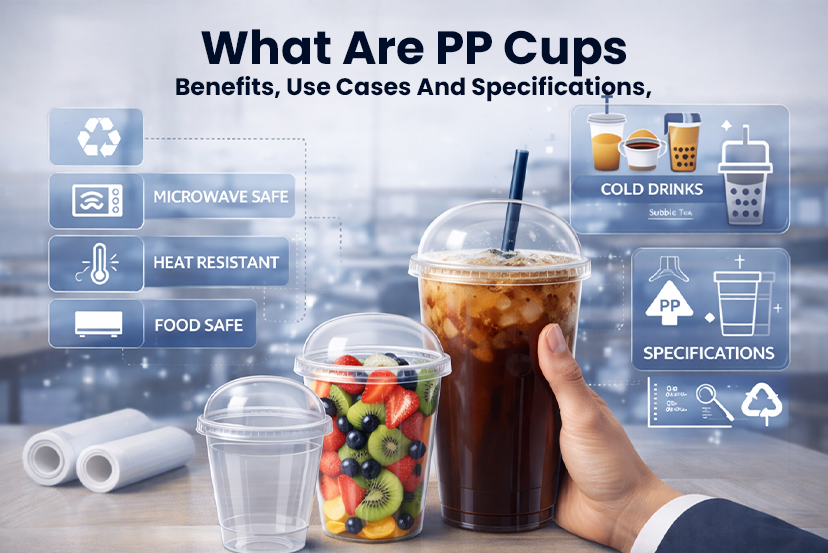
PP cups are one of the most widely used plastic cups in homes, offices, food outlets, events, and industrial packaging applications. Made from polypropylene (PP), these cups are lightweight, durable, heat-resistant, and cost-effective, making them a practical choice for serving both hot and cold beverages. From tea stalls and juice counters to corporate cafeterias and takeaway businesses, PP disposable cups are preferred for their convenience, hygiene, and reliable performance. In this article, we will understand what PP cups are, their benefits, uses, specifications, and key factors to consider before buying.
What Are PP Cups?
PP cups are drinking or serving cups manufactured using polypropylene thermoplastic polymer, a material known for its strength, flexibility, and resistance to heat and moisture. These cups are commonly available in transparent, translucent, or colored variants and are used for serving water, tea, coffee, juice, lassi, soft drinks, desserts, and food samples.
Compared to many other plastic alternatives, polypropylene cups are more durable and less prone to cracking under normal handling. Their smooth finish, stackable design, and easy disposability make them highly suitable for commercial, institutional, and personal use.
How Are PP Cups Made?
PP cups are generally manufactured using injection molding or thermoforming processes. In these methods, polypropylene granules are melted and shaped into cup molds to create uniform products in different sizes and thickness levels.
The final cups are designed to offer:
- Good structural strength
- Leak resistance
- Lightweight handling
- Better tolerance to moderate heat
- Easy storage and transportation
This makes PP plastic cups suitable for high-volume applications where affordability and hygiene are equally important.
What are the Key Features of PP Cups?
PP cups are popular because they combine convenience with performance. Some of their most important features include:
1. Lightweight and Easy to Handle
One of the biggest advantages of PP disposable cups is that they are extremely lightweight. This reduces bulk handling effort and makes it ideal for mass consumption settings such as canteens, functions, and food stalls.
2. Good Heat Resistance
Unlike some low-grade plastic alternatives, PP cups can handle moderately hot beverages such as tea, coffee, and soups without losing shape easily.
3. Crack and Impact Resistance
Polypropylene is a durable plastic material, which means these cups are less likely to crack during stacking, transportation, or use.
4. Hygienic for Single Use
PP cups are widely used in places where maintaining hygiene is essential. Since they are often designed for single use, they help reduce contamination risks in public or food-service environments.
5. Available in Multiple Sizes
These cups are manufactured in a variety of capacities to suit different applications, from small tea cups to larger cold drink and juice cups.
6. Clear and Attractive Appearance
Many transparent PP cups offer a clean and professional presentation, making them ideal for serving beverages, desserts, or tasting samples.
Understand the Benefits of PP Cups
Businesses and consumers prefer polypropylene cups because they offer a balance of performance, affordability, and practicality. Here are the major benefits:
1. Cost-Effective for Bulk Use
PP cups are affordable and ideal for high-volume consumption environments such as restaurants, offices, catering services, hospitals, schools, and events. Their low cost per piece makes them highly economical for regular use.
2. Suitable for Hot and Cold Applications
One of the biggest benefits of PP cups is their versatility. They can be used for:
- Hot tea
- Coffee
- Soup
- Water
- Cold drinks
- Milkshakes
- Juice
- Desserts
This dual usability increases their demand across multiple industries.
3. Better Durability Than Thin Disposable Cups
Compared to very thin disposable alternatives, PP plastic cups generally offer better rigidity and shape retention. This helps avoid spills, breakage, and user inconvenience.
4. Safe and Food-Friendly Material
Food-grade polypropylene is widely used in packaging and food-contact applications. When sourced from reliable manufacturers, PP cups are considered suitable for serving beverages and light food items.
5. Easy to Store and Transport
Because these cups are stackable and lightweight, they are easy to pack, store, and move in large quantities. This is especially useful for wholesalers, event planners, and hospitality businesses.
6. Ideal for Branding and Commercial Use
PP cups can also be available in printed or customized variants, making them suitable for promotional use in cafés, beverage counters, and branded food service businesses.
Check out the Common Use Cases of PP Cups
The popularity of PP disposable cups comes from their wide usability across industries. Here are some of the most common use cases:
1. Tea and Coffee Serving
One of the most common uses of PP cups is serving hot beverages like:
- Tea
- Coffee
- Green tea
- Black coffee
- Instant beverage mixes
This makes them ideal for offices, railway stations, vending areas, and roadside stalls.
2. Juice and Cold Drink Outlets
Transparent PP cups are widely used by:
- Juice shops
- Smoothie counters
- Cold coffee vendors
- Soft drink stations
- Mocktail and shake outlets
Their clear appearance improves beverage presentation and customer appeal.
3. Food and Catering Services
PP cups are commonly used in:
- Catering events
- Birthday parties
- Weddings
- Community functions
- Corporate events
- Outdoor food stalls
They provide a hygienic and convenient serving solution for beverages and desserts.
4. Hospitals and Clinics
In medical and healthcare settings, PP cups are often used for:
- Drinking water
- Medicine dispensing
- Patient beverage serving
- Sample handling in certain low-risk uses
Their disposable nature supports cleanliness and easy waste handling.
5. Offices and Institutional Cafeterias
Many offices, factories, and educational institutions use PP plastic cups in pantry areas and cafeterias for regular tea, coffee, and water dispensing.
6. Ice Cream, Desserts, and Food Sampling
PP cups are also used for:
- Ice cream scoops
- Yogurt servings
- Dessert portions
- Chutneys and dips
- Food tasting samples
Their versatility makes them useful beyond just beverages.
Quick Look at the Various Types of PP Cups
There are different types of PP cups available in the market depending on usage and presentation needs.
1. Transparent PP Cups
These are commonly used for cold beverages, juices, and desserts where visual presentation matters.
2. Printed PP Cups
These cups are used by brands, cafés, and event organizers for promotional or commercial branding.
3. Plain White or Colored PP Cups
These are often used in offices, tea stalls, canteens, and industrial settings.
4. Thick-Wall PP Cups
These cups offer better grip and improved durability, making them suitable for premium beverage service.
5. Small Capacity PP Cups
Used for tea, medicine, tastings, or small beverage servings.
Specifications of PP Cups
Before buying PP cups, it is important to understand their technical and practical specifications. These specifications help determine suitability for specific applications.
1. Material
- Material Type: Polypropylene (PP)
- Grade: Food-grade PP (recommended for beverage and food use)
- Finish: Transparent, translucent, white, or colored
2. Capacity Range
PP cups are available in different capacities, such as:
- 50 ml to 100 ml – medicine, tasting, or small tea servings
- 150 ml to 200 ml – regular tea and coffee use
- 250 ml to 300 ml – juice, water, soft drinks
- 350 ml to 500 ml – shakes, smoothies, cold beverages
The cup size should be selected based on the beverage type and serving volume.
3. Thickness and Weight
The durability of a PP disposable cup often depends on its wall thickness and material weight. Thicker cups offer:
- Better grip
- Improved rigidity
- Reduced spill risk
- Better hot beverage handling
4. Heat Resistance
PP cups are known for handling moderate heat better than many lightweight plastic alternatives. This makes them suitable for:
- Tea
- Coffee
- Hot water
- Soups
However, buyers should always verify manufacturer specifications for exact temperature tolerance.
5. Design and Shape
PP cups are available in:
- Straight wall designs
- Ribbed wall designs
- Tapered shapes
- Lid-compatible formats
The design choice depends on storage, stacking, beverage type, and presentation needs.
6. Stackability
Good-quality PP plastic cups are designed for easy stacking, which improves:
- Storage efficiency
- Transportation convenience
- Fast dispensing for commercial use
7. Leak Resistance
Leak-resistant construction is a key specification for beverage service. Reliable PP cups are designed to hold liquids securely without deformation or seepage during normal use.
Advantages of PP Cups Over Other Disposable Options
PP cups stand out in the disposable serving category for several practical reasons:
- Better heat resistance than many thin disposable cups
- Stronger structure and reduced cracking
- Lightweight but durable
- Suitable for both hot and cold beverages
- Better clarity in transparent versions
- Easy bulk handling and storage
- Economical for commercial use
These qualities make PP cups a preferred option in food service and beverage packaging.
Things to Consider Before Buying PP Cups
If you are planning to buy PP cups in bulk, keep the following factors in mind:
1. Intended Use
Choose the cup size and thickness based on whether you need it for tea, coffee, water, juice, or desserts.
2. Food-Grade Quality
Always ensure that the cups are made from food-grade polypropylene for safe beverage and food contact use.
3. Capacity and Design
Select the correct capacity and shape depending on your serving style and business needs.
4. Strength and Thickness
For hot beverages or premium service, thicker and more rigid cups are usually a better choice.
5. Quantity Requirement
Businesses should buy in bulk packs to reduce per-unit cost and ensure regular availability.
6. Supplier Reliability
Always source from a trusted supplier or platform that offers quality assurance, proper packaging, and multiple brand options.
Where Are PP Cups Commonly Used?
You will commonly find PP disposable cups in:
- Tea stalls
- Coffee vending machines
- Juice shops
- Restaurants
- Food courts
- Office pantries
- Hospitals
- Schools and colleges
- Caterers and event companies
- Ice cream and dessert counters
Their adaptability across sectors is one of the main reasons behind their high demand.
Why PP Cups Are a Popular Packaging and Serving Choice
The growing demand for PP cups comes from their practical combination of:
- Hygiene
- Convenience
- Durability
- Heat tolerance
- Cost efficiency
- Multi-purpose usability
Whether for a small tea counter or a large institutional setup, polypropylene cups offer a dependable solution for everyday beverage and food-serving needs.
Conclusion
PP cups are an essential disposable serving product used across food services, retail, healthcare, offices, and events. Made from polypropylene, these cups are known for their lightweight structure, durability, heat resistance, and affordability. They are suitable for serving a wide variety of hot and cold beverages as well as desserts and sample portions.
For a practical, hygienic, and economical serving solution, PP disposable cups are a smart choice for both personal and commercial use. So, if you are looking for PP cups in bulk at wholesale prices, then Moglix packaging is the one-stop destination. You can select the right size, thickness, and food-grade quality, and businesses can ensure better customer convenience and efficient daily operations.
Get In Touch