


Published: February 27, 2026
Primary vs Secondary vs Tertiary Food Packaging - What’s the Difference?
Food packaging plays a critical role in protecting products, extending shelf life, ensuring compliance, and enhancing brand visibility. Whether you're a food manufacturer, distributor, or D2C brand, understanding the different levels of packaging helps you optimize cost, safety, and logistics.
In this guide, we’ll break down:
- Primary vs Secondary vs Tertiary packaging
- How to choose the right packaging for different food categories
- Best packaging solutions for dry foods
- Beverage packaging options (PET, glass, cans & sustainable alternatives)
- Top FAQs & People Also Ask
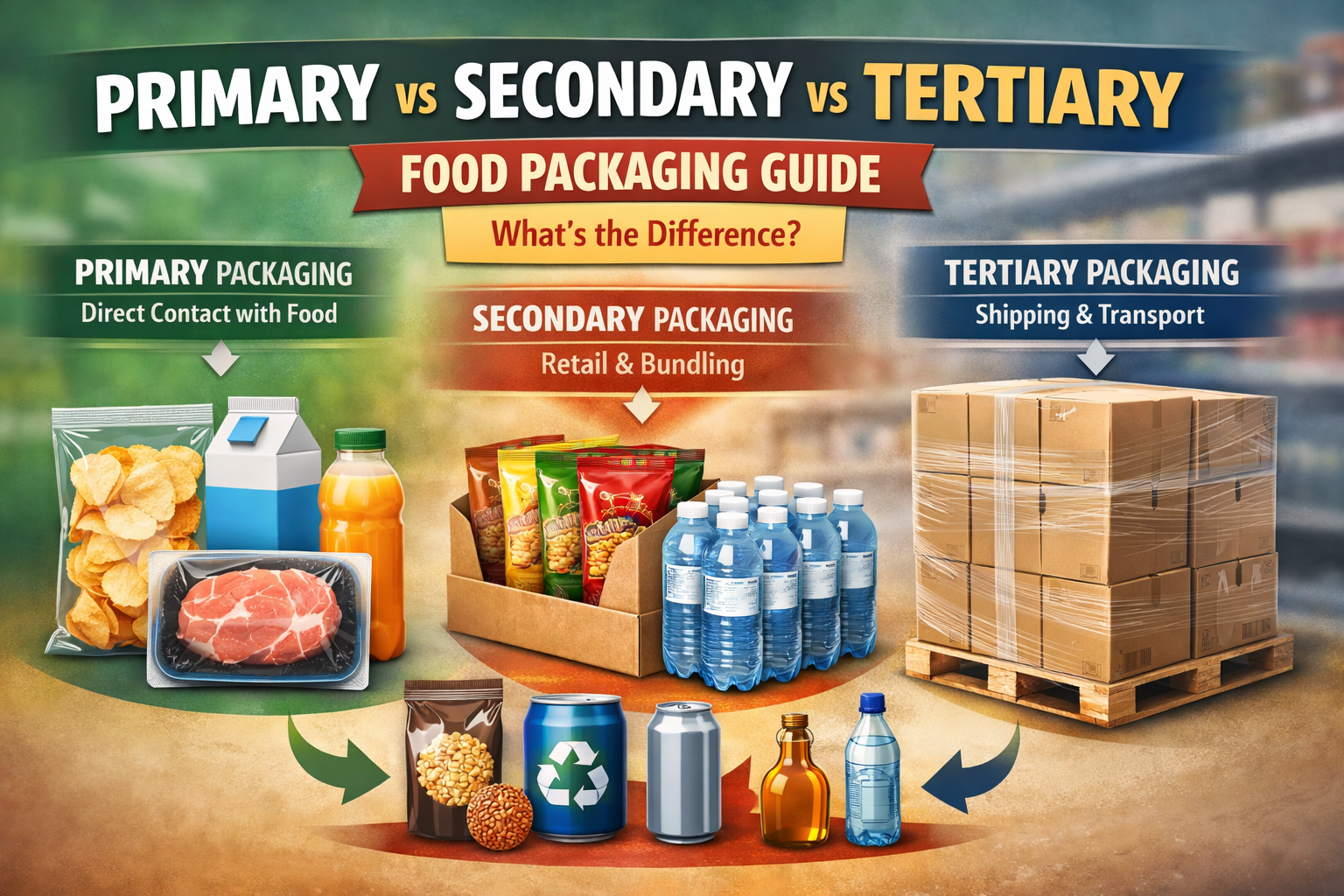
What Is Primary, Secondary, and Tertiary Food Packaging?
Primary Packaging (Consumer Packaging)
Primary packaging is the first layer that directly comes in contact with the food product.
Purpose:
- Protect from contamination
- Preserve freshness
- Provide essential product information
- Enhance shelf appeal
Examples:
- Snack pouches
- Milk cartons
- PET bottles
- Vacuum-sealed meat packs
- Chocolate wrappers
It must comply with food safety standards and be made from food-grade materials.
Secondary Packaging (Outer Packaging)
Secondary packaging groups multiple primary packages together for display, branding, and retail handling.
Purpose:
- Protect primary packaging
- Improve shelf organization
- Support branding & promotions
Examples:
- Corrugated cartons holding multiple juice bottles
- Shrink-wrapped water bottle packs
- Printed display boxes for snack bars
Tertiary Packaging (Transport Packaging)
Tertiary packaging is used for bulk handling, warehousing, and transportation.
Purpose:
- Protect goods during shipping
- Enable stacking and palletization
- Reduce transit damage
Examples:
- Palletized cartons
- Stretch-wrapped bulk shipments
- Industrial shipping crates
Quick Comparison Table
Type Direct Contact with Food Purpose Example Primary Yes Protection & preservation Chips pouch Secondary No Grouping & branding Carton of 12 juice bottles Tertiary No Bulk transport Palletized boxes
How to Choose the Right Packaging for Different Food Categories
Choosing the right packaging depends on:
1. Shelf Life Requirements
- Long shelf life → Use barrier materials (multi-layer laminates, vacuum packs, MAP technology)
- Short shelf life → Lightweight and breathable materials may work
2. Moisture & Oxygen Sensitivity
- Dry foods need moisture barriers
- Oils & beverages require oxygen barriers
3. Storage & Transportation Conditions
- Frozen food → Cold-resistant packaging
- Export goods → Strong tertiary packaging
4. Regulatory Compliance
Ensure materials meet food safety standards (FSSAI or relevant regulatory bodies).
5. Branding & Consumer Experience
- Transparent windows for visibility
- Easy-tear & resealable features
- Eco-friendly claims for sustainability-conscious buyers
Best Packaging Solutions for Dry Foods (Grains, Pulses, Snacks)
Dry foods require protection from moisture, air, insects, and contamination.
Grains & Pulses
Recommended Packaging:
- Multi-layer laminated pouches
- BOPP or PP woven sacks (bulk)
- Vacuum-sealed packs for premium branding
- Stand-up zipper pouches
- Leak-proof food containers
Key Features Needed:
- Moisture barrier
- Tear resistance
- Resealability for consumer convenience
Snacks (Chips, Namkeen, Biscuits)
Recommended Packaging:
- Metalized polyester laminated pouches
- Nitrogen-flushed packs
- Pillow pouches
- Printed stand-up pouches
Why?
Snacks are sensitive to oxygen and moisture, which affect crispiness. Nitrogen flushing helps maintain freshness.
Beverage Packaging – PET, Glass, Cans & Sustainable Alternatives
Beverage packaging must ensure leak-proof storage, pressure resistance, and shelf stability.
PET Bottles
Best For: Water, soft drinks, juices
Advantages:
- Lightweight
- Cost-effective
- Shatter-resistant
- Recyclable
Limitation: Lower premium perception compared to glass.
Best For: Premium juices, dairy drinks, alcoholic beverages
Advantages:
- Excellent barrier properties
- 100% recyclable
- Premium appeal
Limitation: Heavy & fragile
Aluminum Cans
Best For: Carbonated beverages, energy drinks
Advantages:
- Excellent oxygen & light barrier
- Fast cooling
- Highly recyclable
Sustainable Alternatives
- Plant-based bio-plastics (PLA)
- Recycled PET (rPET)
- Paper-based bottles
- Returnable glass systems
Many brands are shifting toward circular packaging models to reduce their carbon footprint.
Top FAQs – Food Packaging
What is the difference between primary and secondary packaging?
Primary packaging directly contacts food; secondary packaging groups products for retail display.
Why is tertiary packaging important?
It protects products during transportation and reduces damage in bulk shipping.
Which packaging is best for dry foods?
Multi-layer laminated pouches with moisture barriers and resealable features work best.
Is PET safe for beverages?
Yes, food-grade PET is widely used and approved for beverage packaging.
What packaging increases shelf life?
Vacuum packaging, Modified Atmosphere Packaging (MAP), and multi-layer barrier films.
What are the 3 levels of food packaging?
Primary (direct contact), Secondary (grouping), and Tertiary (transport).
What is the best packaging material for snacks?
Metalized laminated pouches with nitrogen flushing.
Which beverage packaging is most sustainable?
Glass and aluminum are highly recyclable; rPET is also a growing sustainable option.
How do I choose packaging for my food business?
Consider shelf life, moisture sensitivity, transportation needs, regulations, and branding.
Conclusion
Understanding the difference between primary, secondary, and tertiary food packaging helps businesses improve product safety, reduce losses, and enhance branding. From moisture-resistant pouches for grains to PET and glass solutions for beverages, selecting the right packaging depends on product category, logistics, and sustainability goals. Investing in the right packaging strategy not only protects your food products - it strengthens your brand and boosts customer trust. If you are looking to buy packaging materials and solutions in bulk, Moglix Packaging is the one stop designation to procure them effortlessly. We ensure the purchase of packaging materials at the most competitive prices with customization an dpriniting options.
Tags:
Get In Touch